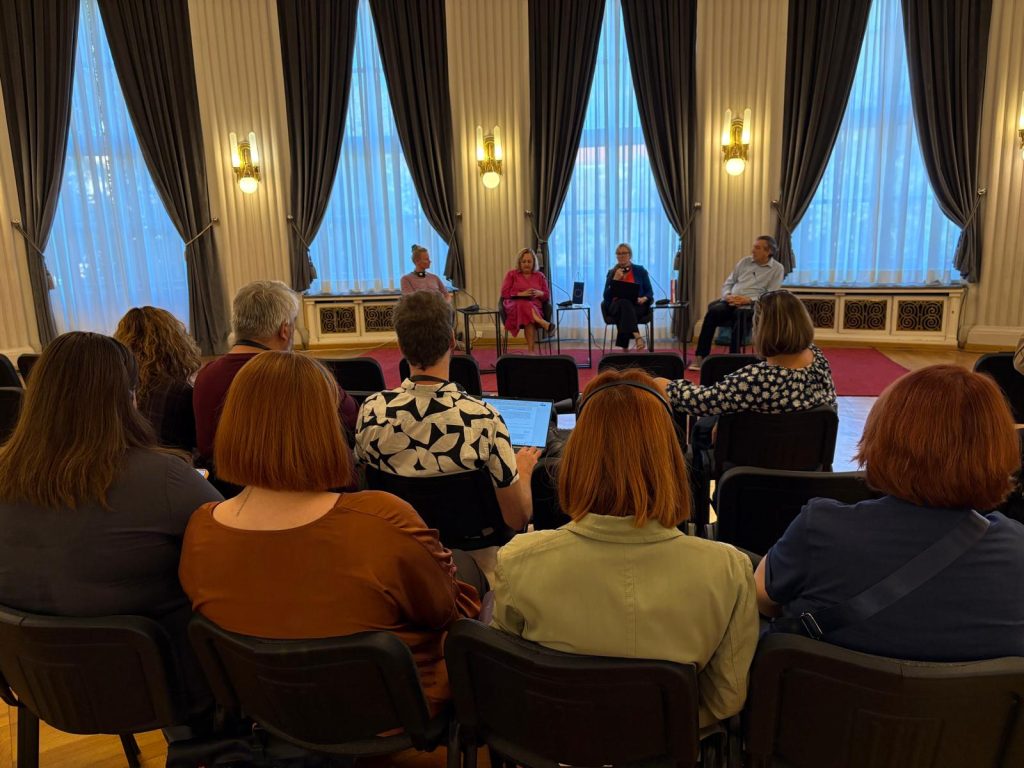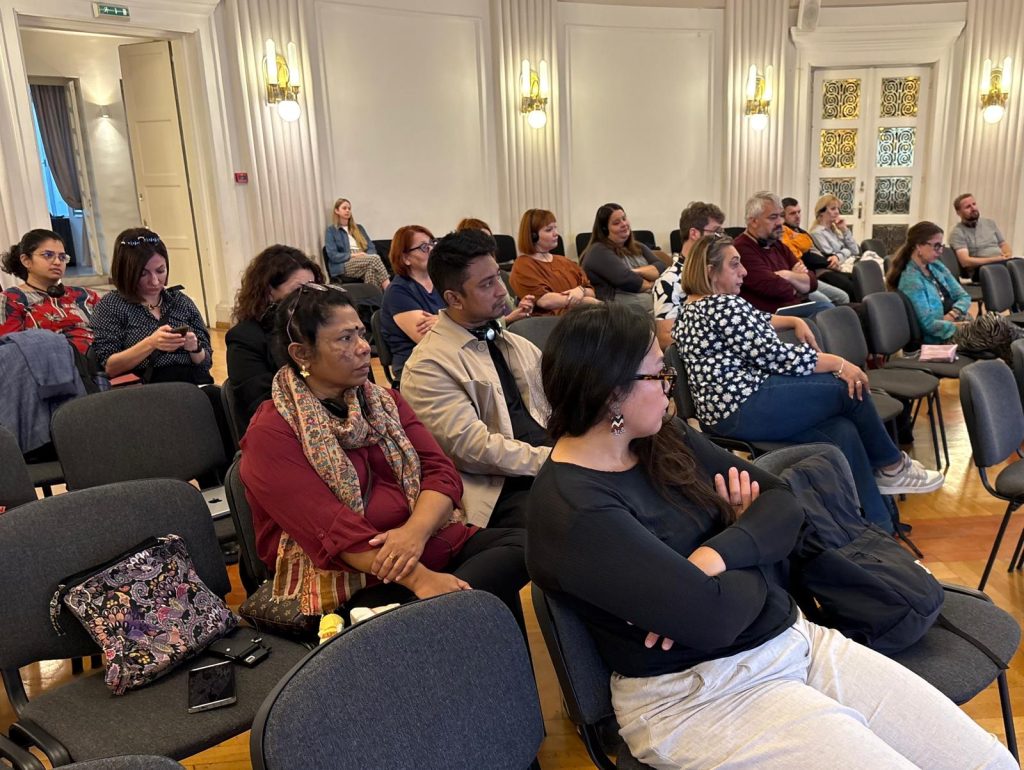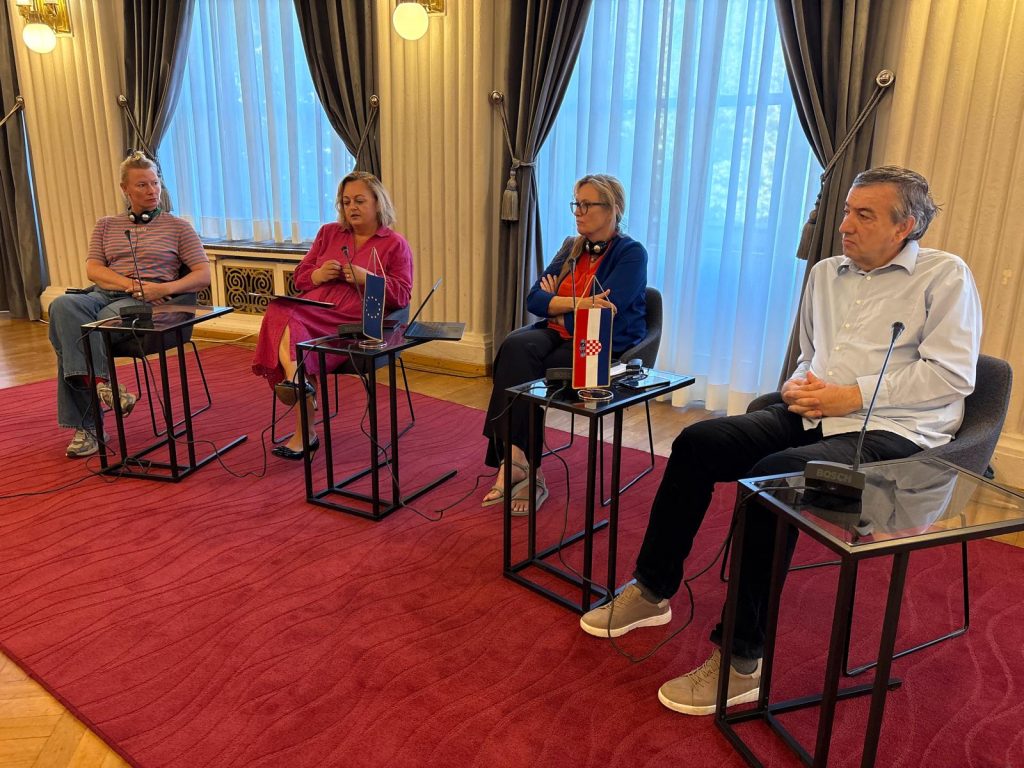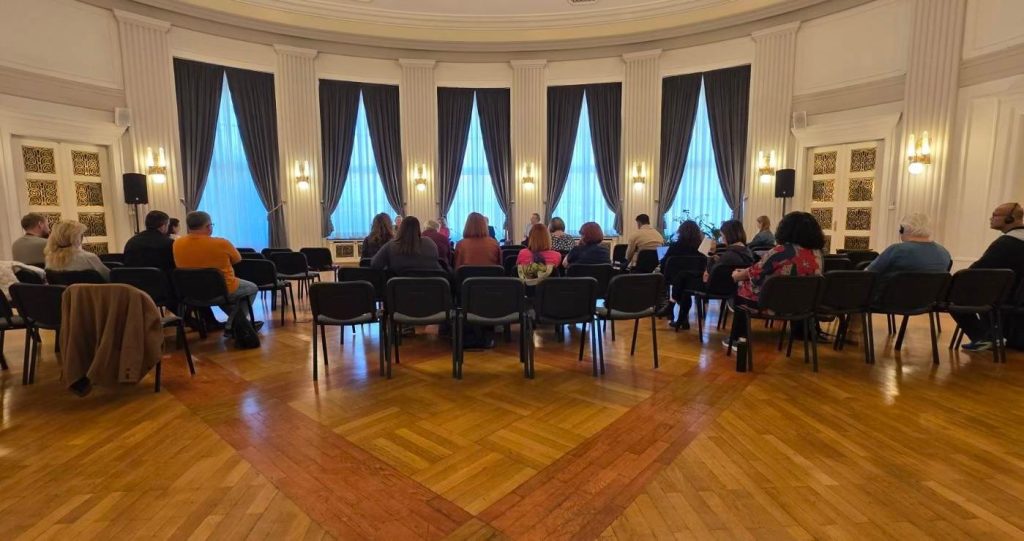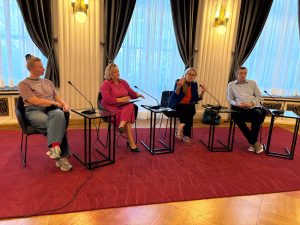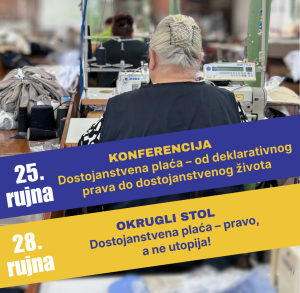
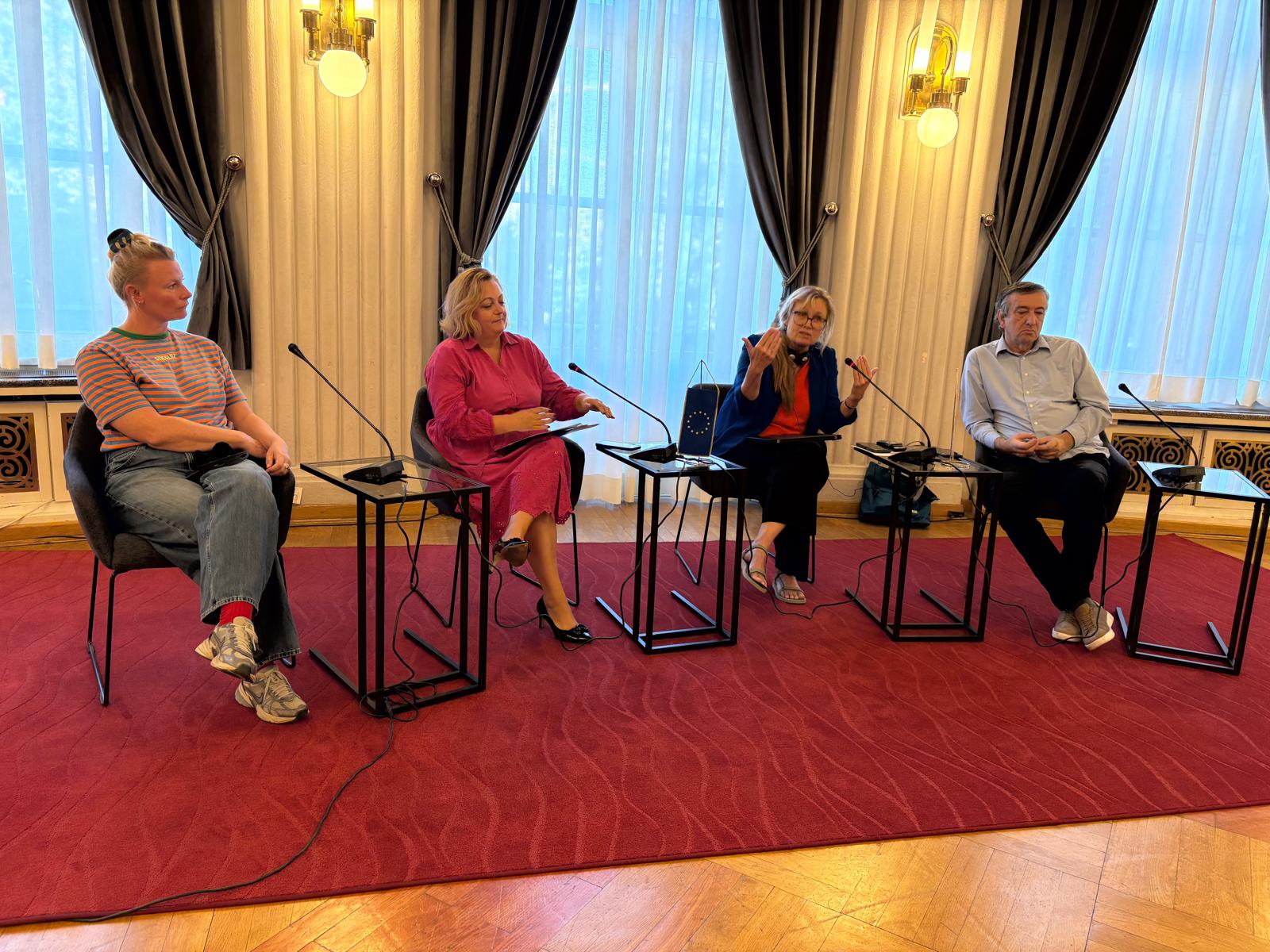
Today, Monday, September 28, as wages and working conditions are once again at the forefront of public debate due to the public transport workers’ strike, Novi sindikat held a round table at the Novinarski dom (Journalists’ House) entitled “Living Wage – a Right, Not a Utopia.”
The discussion brought together Anne Bienias, Living Wage Coordinator at the international Clean Clothes Campaign network, Mario Iveković, President of Novi sindikat, and Anita Zirdum, Acting Director of the Directorate for Labour and Occupational Health and Safety at the Ministry of Labour. The discussion was moderated by Ineke Zeldenrust, Coordinator at the Clean Clothes Campaign International Office.
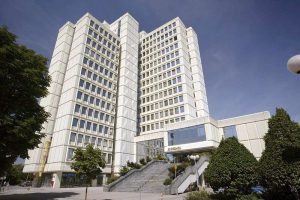
The round table followed the international conference held at Hotel Novi Zagreb in Lanište to mark the 3rd International Living Wage Day. At the conference, preliminary research findings were presented indicating that a living wage in Croatia should amount to more than €3,000.
Novi sindikat: Without a clear benchmark, the debate over how much workers need to live remains arbitrary
The central question of the discussion, directed at Ministry of Labour representative Anita Zirdum, was why Croatia still has no official calculation of how much is actually required for a dignified life, even though the Constitution guarantees every employee the right to earnings sufficient to provide themselves and their family with a free and dignified life.
Zirdum argued that a sudden and excessive increase in wages could disrupt the market.
Responding to this, Novi sindikat President Mario Iveković stressed that no one expects wages to rise to €3,000 overnight. However, without a clear calculation and a clear goal, he said, it is impossible to have a serious discussion about how much workers actually need for a dignified life, and the debate is reduced to arbitrary figures.
He also argued that one of the reasons workers still do not receive living wages is that market developments in recent years have allowed companies to generate enormous profits while wages have failed to keep pace.
Iveković cited Slovenia as an example, noting that the government significantly increased the minimum wage without causing the economic disruption that is often predicted. The main result, he said, was that workers received higher wages, nothing else, no disruptions.
According to Iveković, a living wage must enable workers to afford adequate housing or rent, buy good-quality food without constantly having to choose cheaper and inferior alternatives, meet their basic needs and still be able to save part of their income.
He also stressed that the issue is not only the level of wages, but also how the value and profits generated by workers are distributed.
“There are many employers who can afford to pay more and are already paying huge bonuses to managers. But if the minimum wage does not increase, why would they pay workers more when they can pay them less?” Iveković said, stressing the importance of raising the minimum wage.
He pointed out that increases in the minimum wage also create upward pressure on other wages. If the lowest-paid worker earns €800, it is difficult to expect a more skilled or qualified worker to accept only a slightly higher wage in the long term.
Iveković also rejected the frequently repeated claim that wages can rise only when productivity increases. In global supply chains, workers can produce large quantities, as is the case in the textile industry, while companies and brands simultaneously impose very low purchasing prices on suppliers, leaving little room for wage increases.
EU companies must also be held accountable for what happens outside the EU
Clean Clothes Campaign representative Anne Bienias stressed that this is precisely why the issue of a living wage cannot be viewed solely within the borders of an individual country.
The textile industry continues to employ millions of workers, while the world’s largest international brands generate enormous revenues and profits from global supply chains. At the same time, many workers in producing countries still do not earn enough to meet their basic living needs.
Bangladesh, one of the world’s largest garment-producing countries, was cited as an example, with workers’ wages remaining extremely low. The discussion also highlighted that the prices international brands pay for the production of certain garments in Bangladesh have remained unchanged for the past 25 years, despite rising living costs.
Bienias noted that numerous fashion brands have publicly promised living wages over the past decades, yet voluntary commitments have failed to deliver sufficient results. This is why enforceable and legally binding mechanisms are needed, together with continued support for local trade unions and workers organising in producing countries.
Iveković added that the European Union cannot determine wages in countries such as Bangladesh, but it can regulate the responsibilities of companies operating on the European market while organising production outside the EU.
In other words, European companies cannot allow their responsibility to end at the EU’s borders when their profits depend on the labour of people in other parts of the world.
Government representative Anita Zirdum stressed the importance of strong tripartite dialogue between the government, trade unions and employers. She also noted that central and local government can influence living standards by reducing living costs through public services and measures such as subsidised transport, school textbooks and other forms of support.
Participants from the audience responded that local authorities often lack the resources for interventions of this scale and stressed that central government ultimately has the greatest power and responsibility.
A living wage cannot remain a right only on paper
Since the right to earnings that enable a free and dignified life is already enshrined in the Constitution of the Republic of Croatia, the conclusion was that the state must be able to answer a simple question: how much does a dignified life actually cost?
A living wage cannot become a topic only when workers go on strike, when prices rise or when it once again becomes clear that wages are failing to keep pace with the cost of living.
For Novi sindikat, the way forward is clear: Croatia must establish a credible living wage benchmark, monitor how far actual wages fall short of it and take concrete steps to close that gap.
A living wage is neither a luxury nor a utopia. It is a right already guaranteed to Croatian workers by the Constitution.