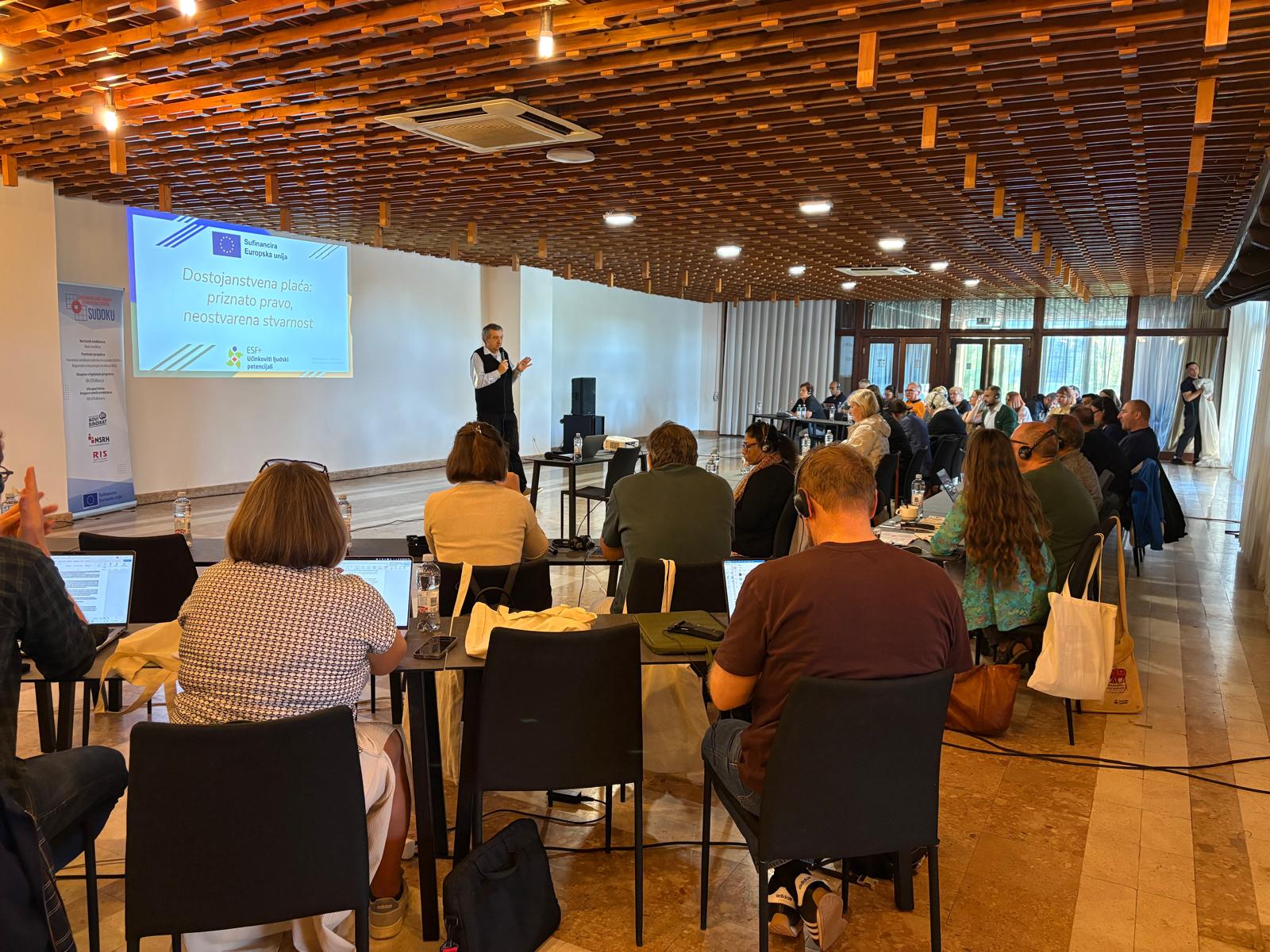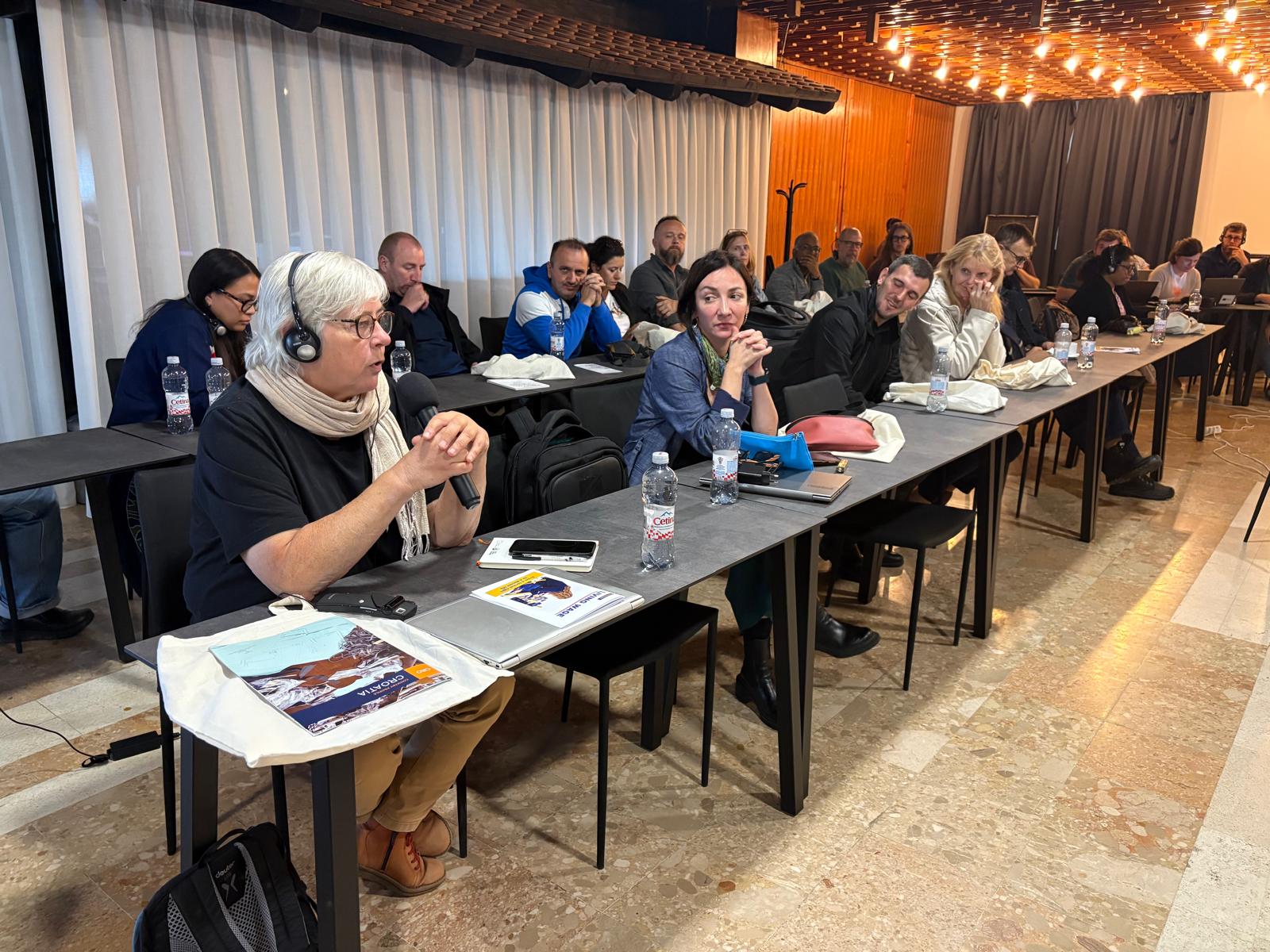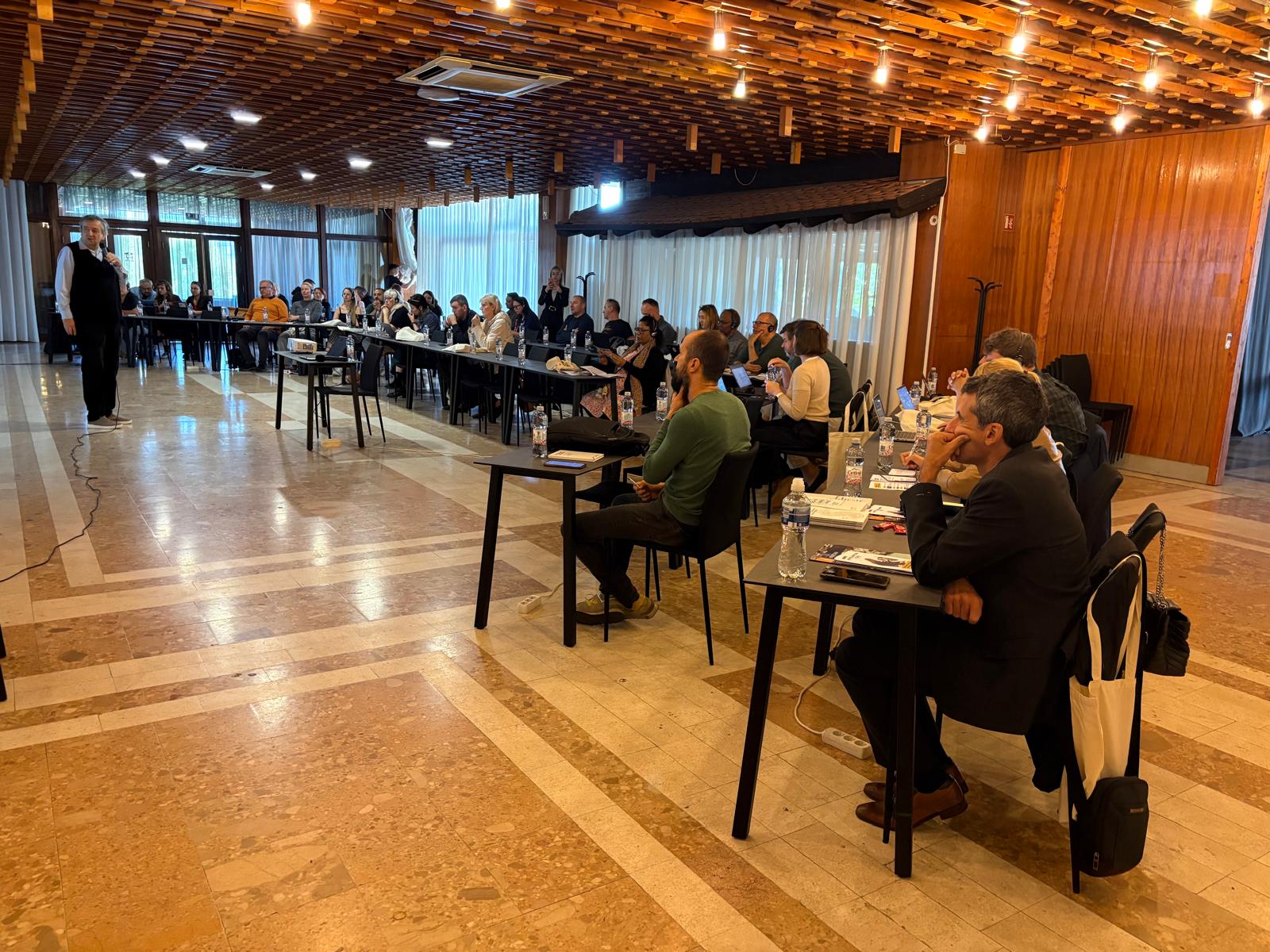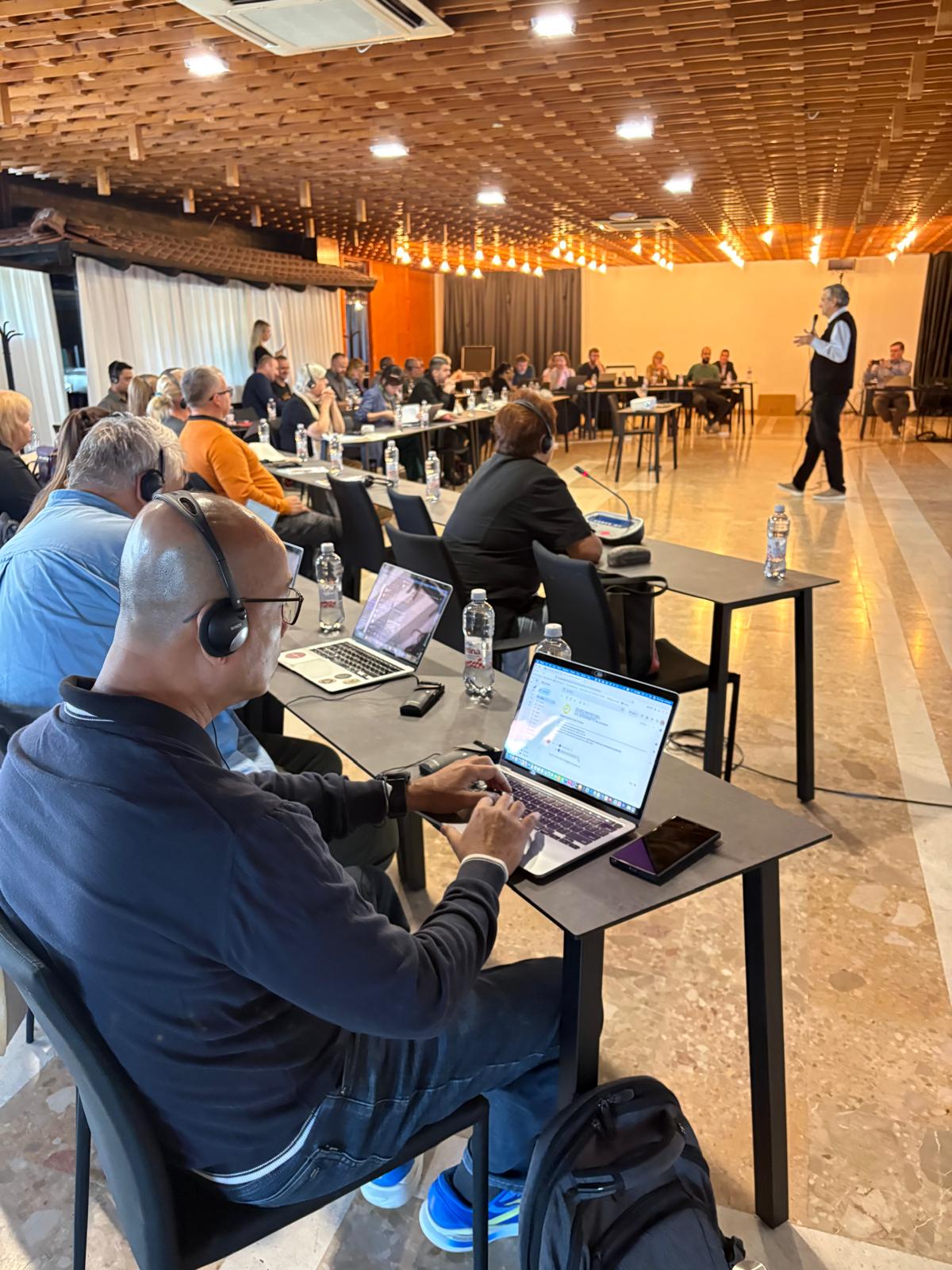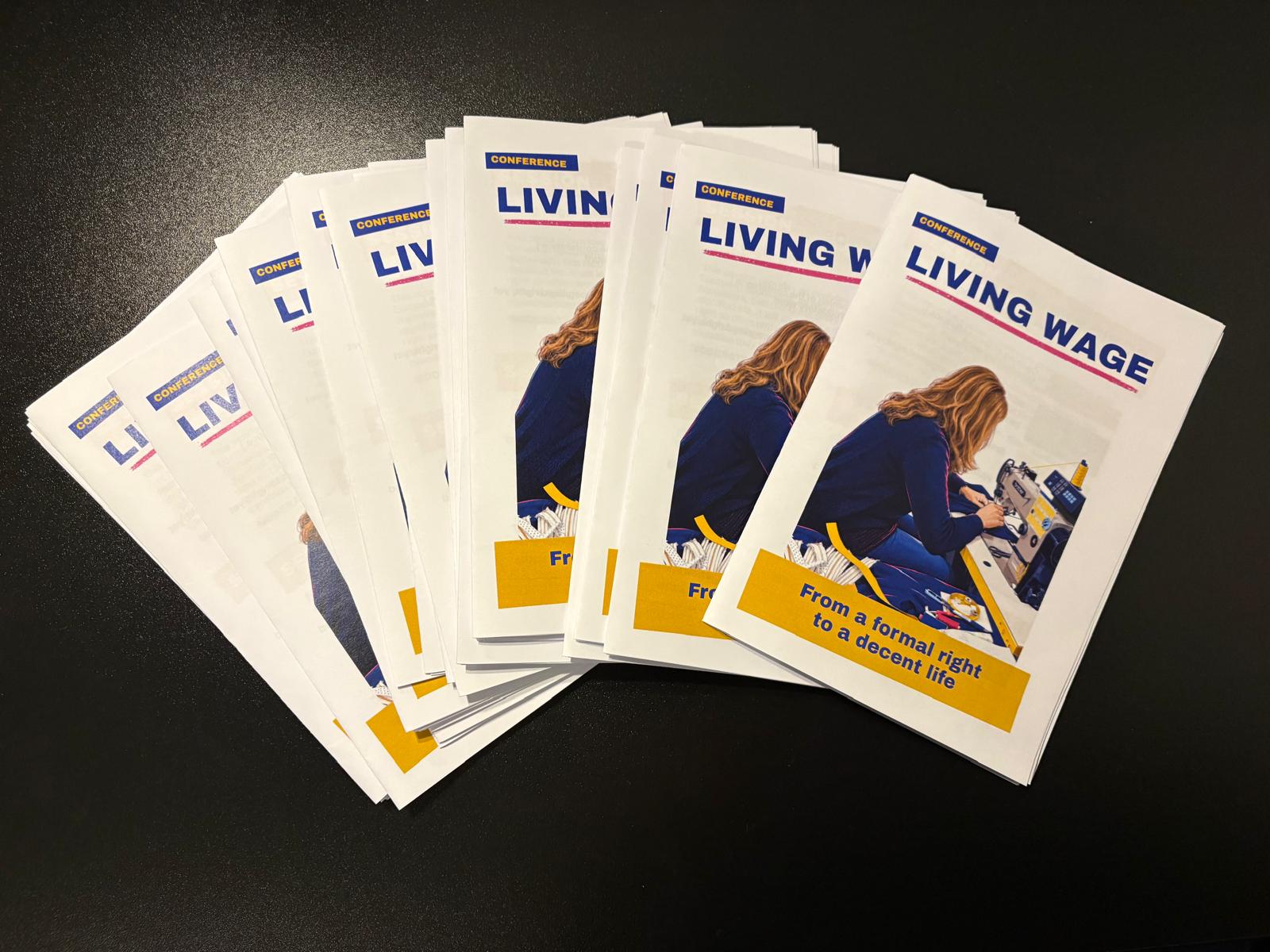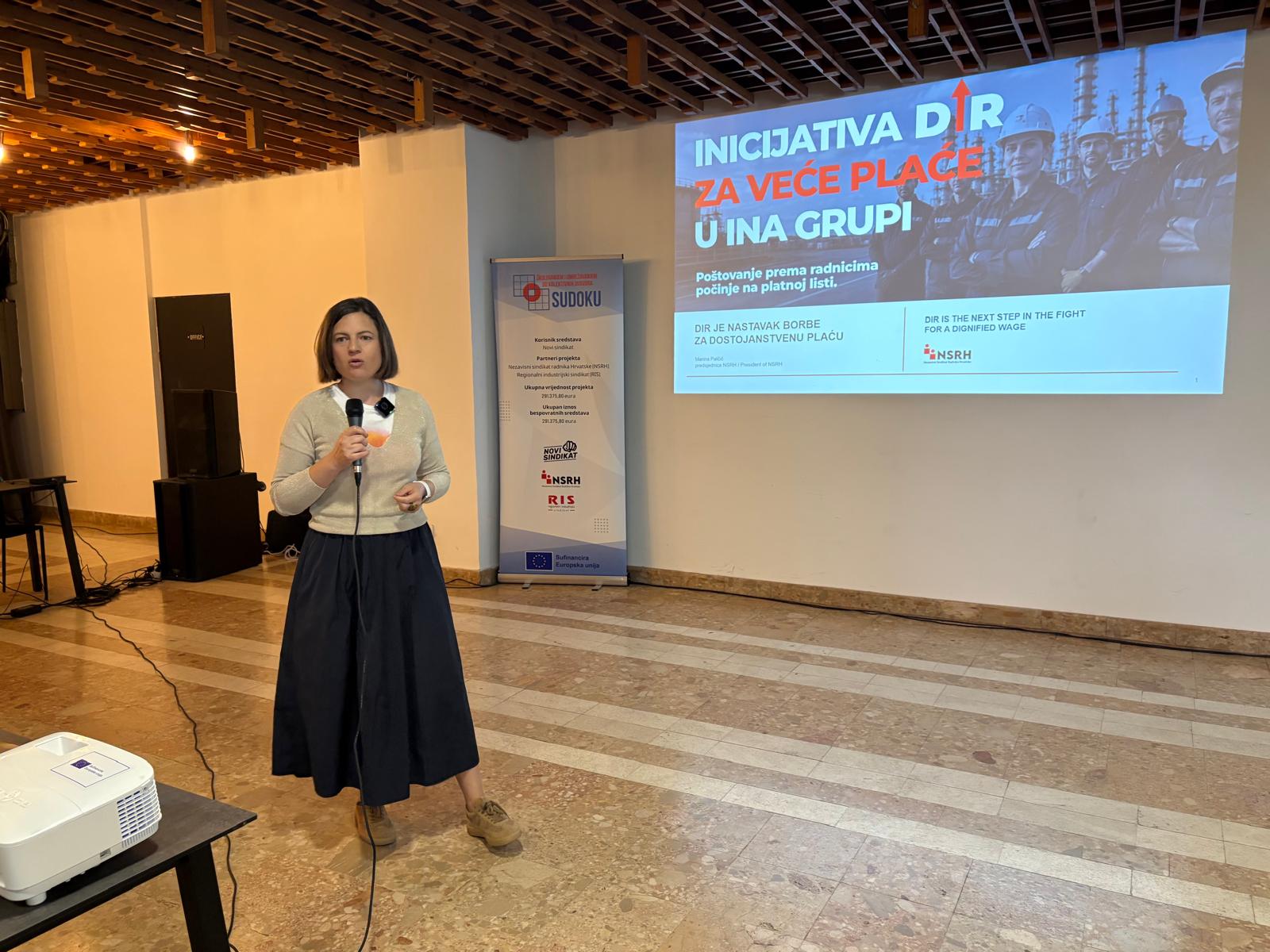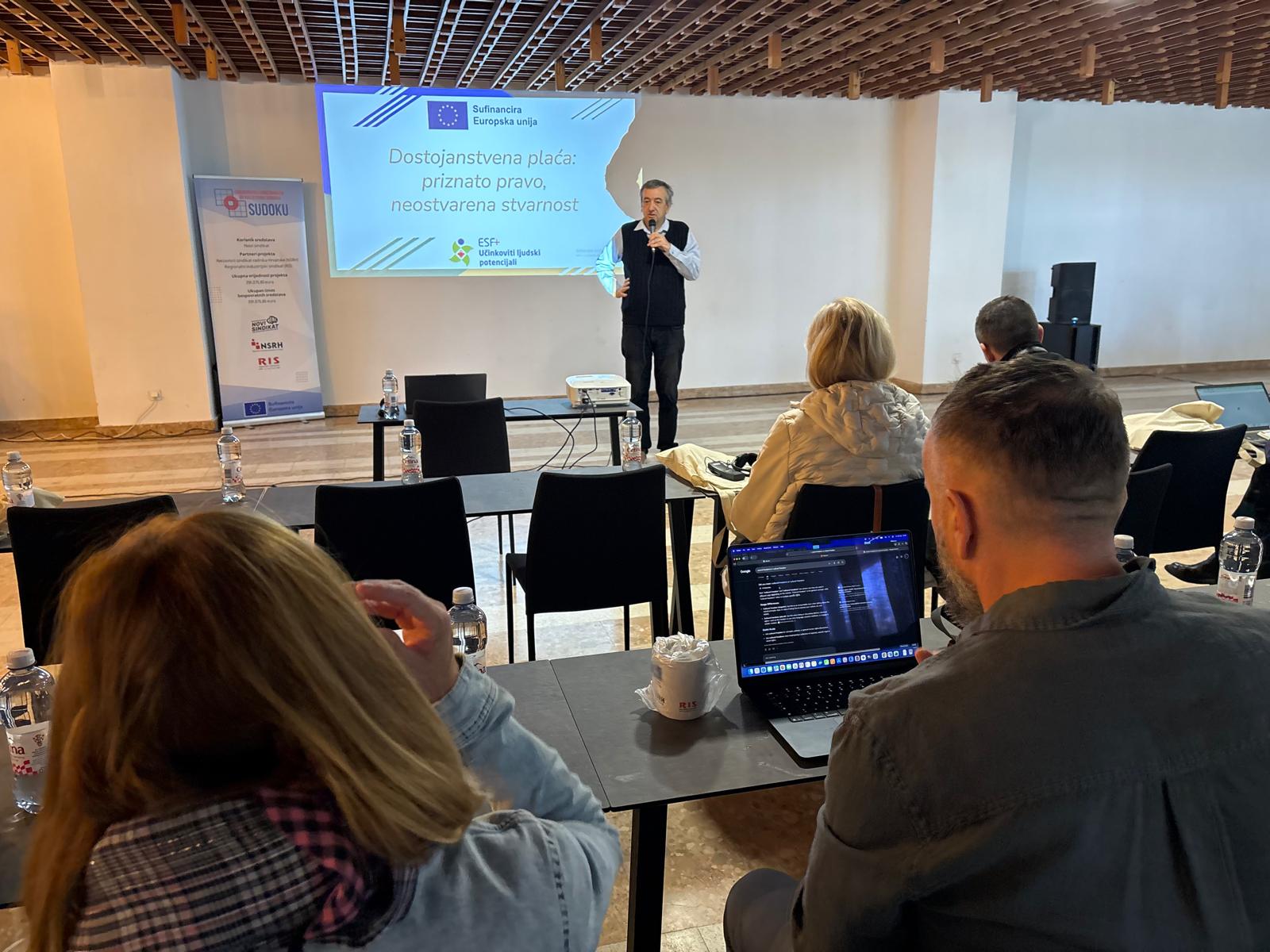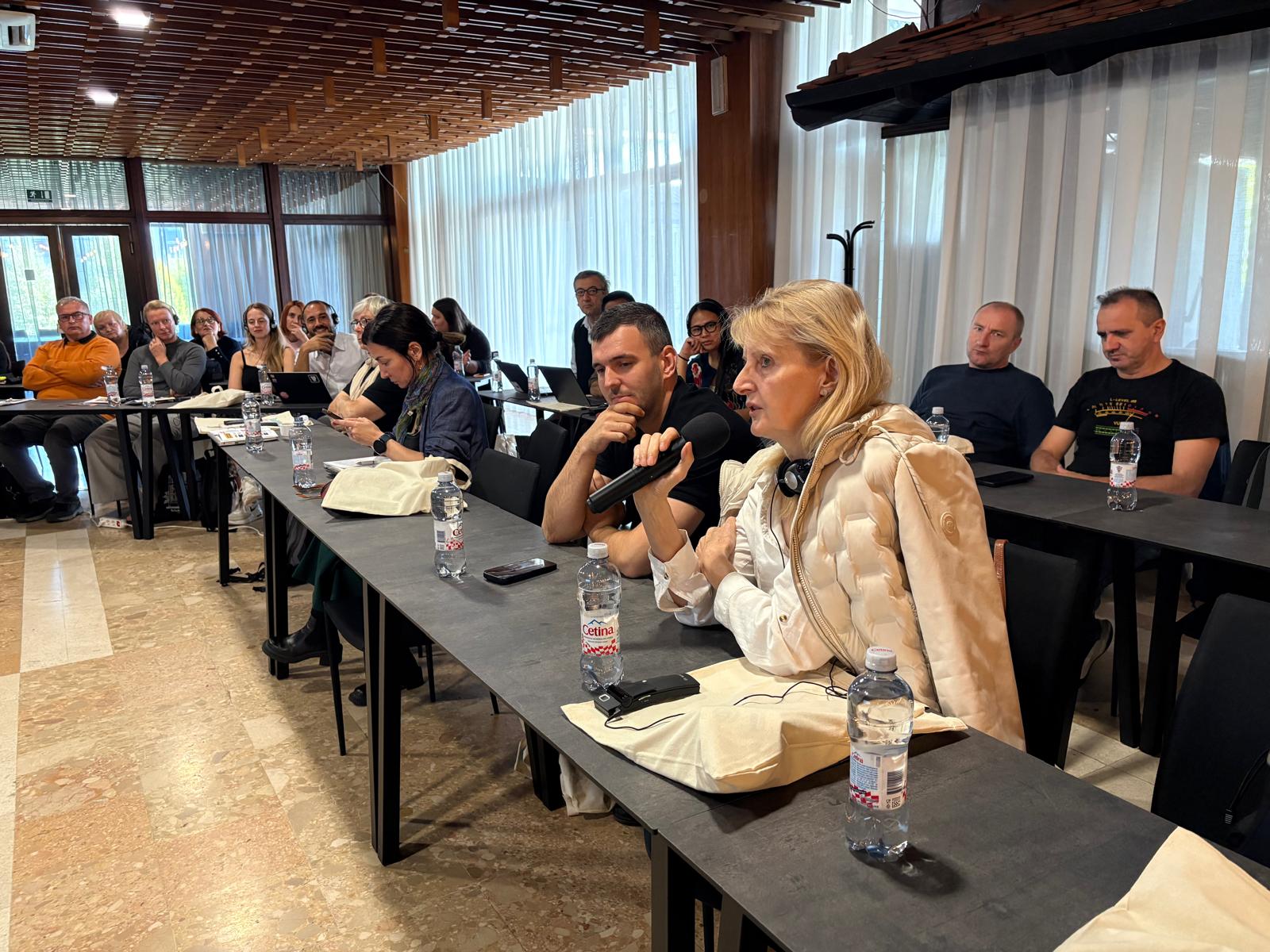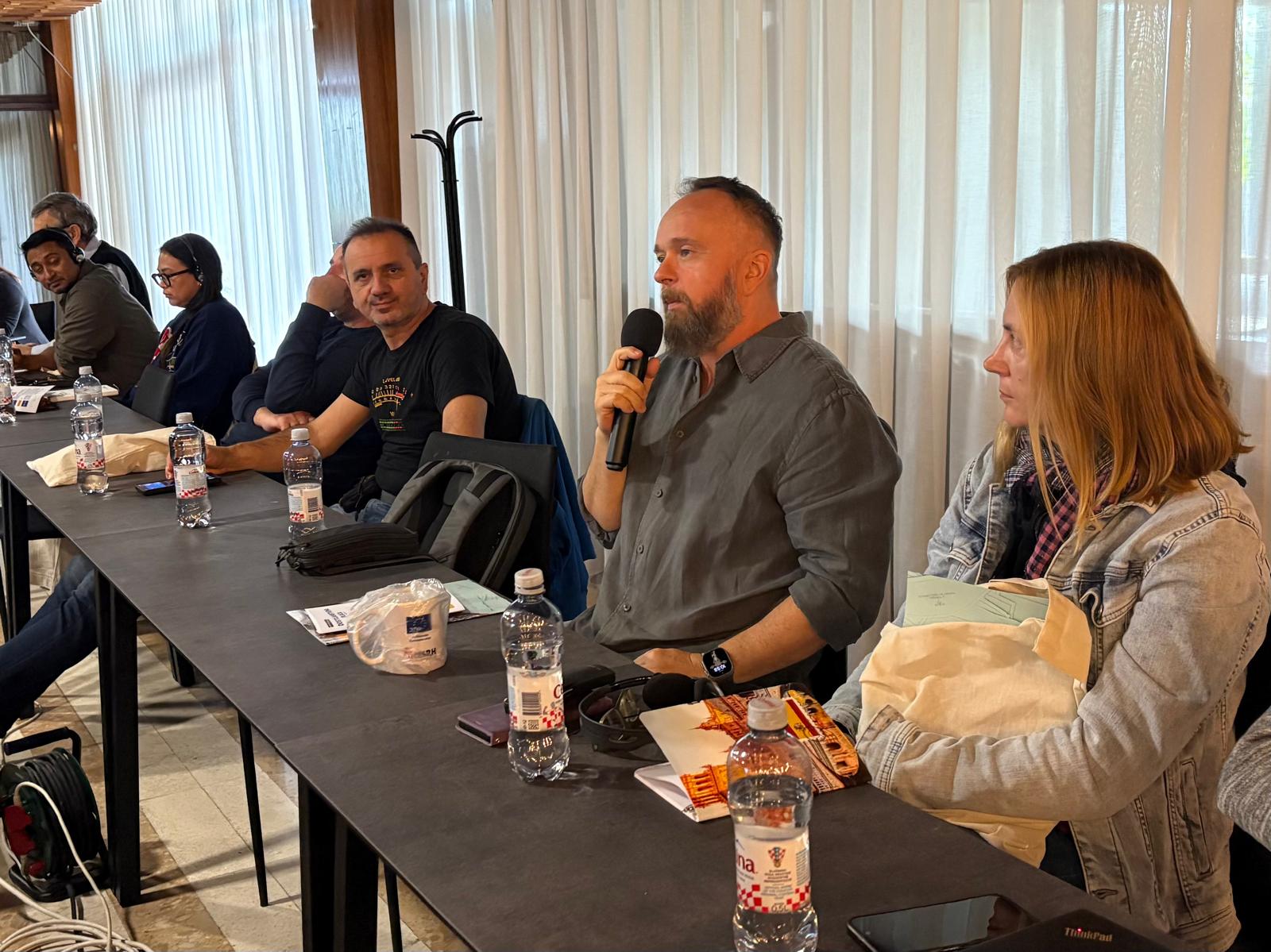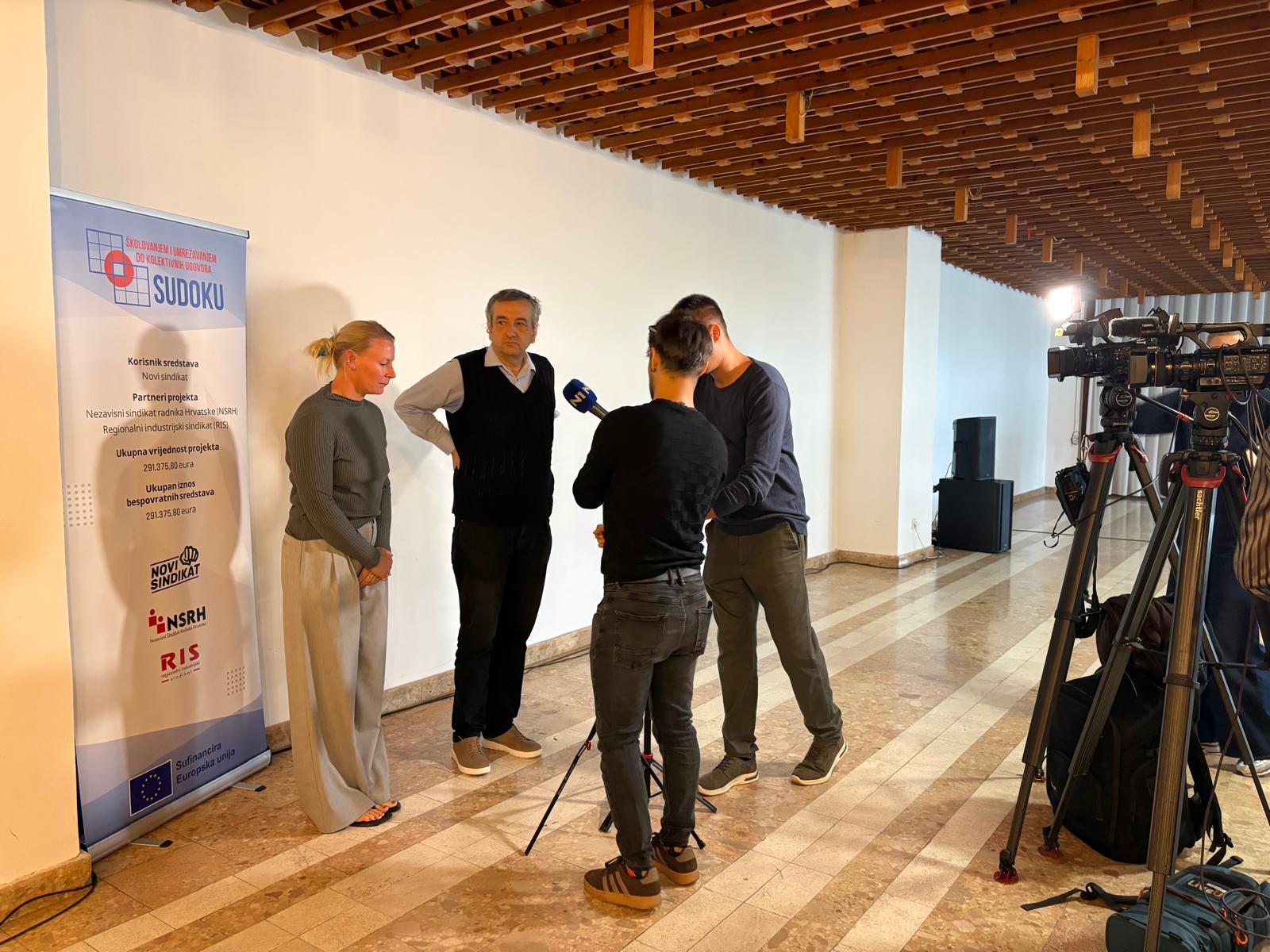
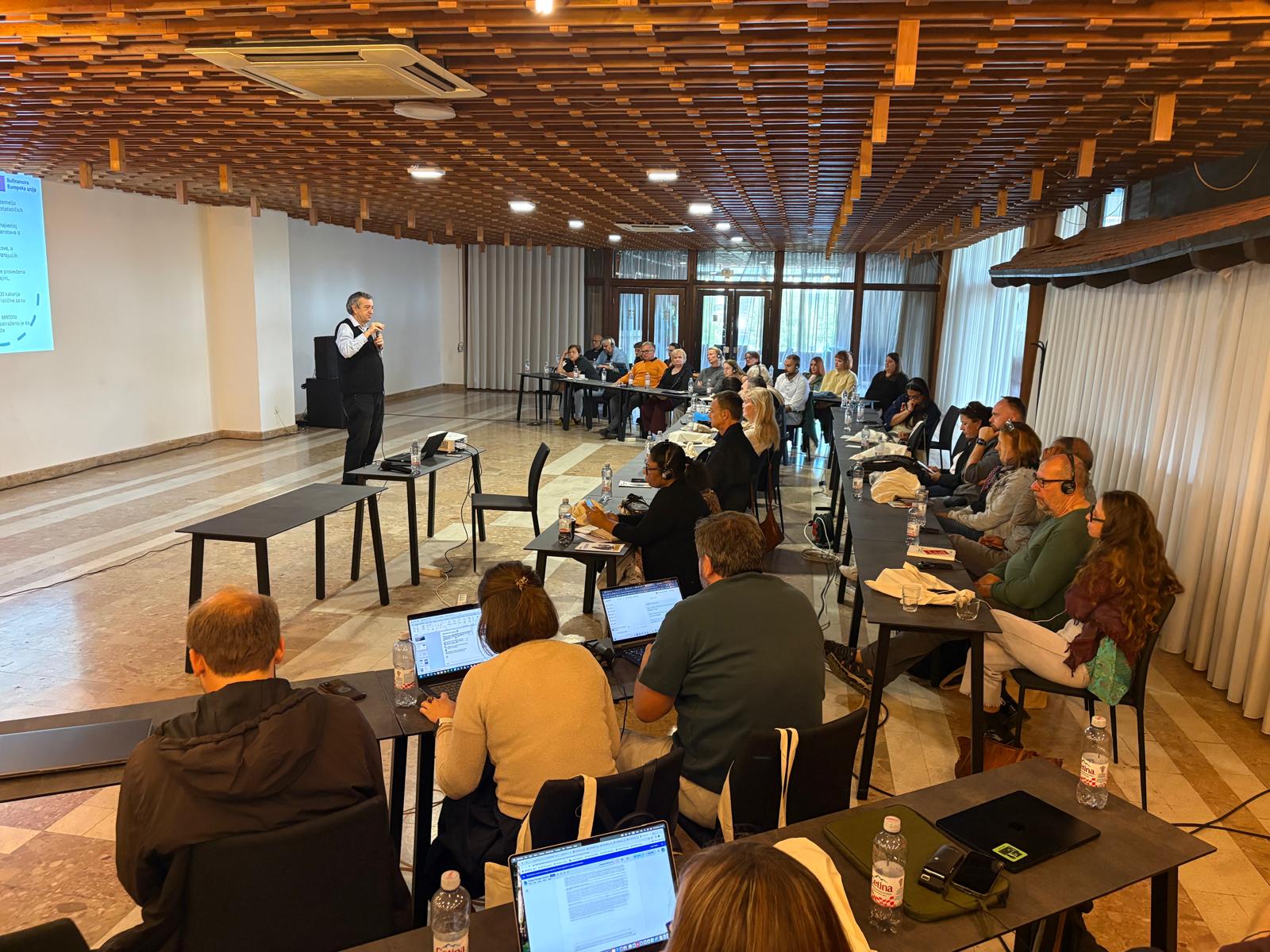
On the occasion of the 3rd International Living Wage Day, Novi sindikat organized an international conference entitled “Living Wage – From a Declarative Right to a Dignified Life”, held at Hotel Novi Zagreb in Zagreb’s Lanište neighborhood. The event was organized as part of the SUDOKU project, implemented by Novi sindikat together with its partners and with financial support from the European Social Fund Plus (ESF+).
The conference brought together members of the international Clean Clothes Campaign network, which advocates for workers’ rights in the textile and garment industry, from more than ten countries, as well as Novi sindikat shop stewards from numerous workplaces, representatives of the Organisation for Economic Co-operation and Development (OECD), and other interested participants.
The program opened with a session dedicated to the recognition of the right to a living wage in international and national documents. Particular emphasis was placed on the Constitution of the Republic of Croatia, whose Article 56 stipulates that “every employee shall have the right to remuneration enabling them to ensure a free and decent life for themselves and their family.”
How can this right become a reality? This was the central question addressed in three parallel workshops.
The first workshop focused on the cost of living in European manufacturing countries, with particular emphasis on the latest research conducted in Croatia into the cost of a food basket. Participants concluded that workers in manufacturing countries face difficult living conditions and that a living wage, just like wage growth in general, should be regarded as an investment in higher living standards and more sustainable economic development. An economy that bases its competitiveness on low wages cannot provide workers with a better life or ensure sustainable social progress in the long term.
The second workshop discussed the Corporate Sustainability Due Diligence Directive and its potential impact on the implementation of living wages throughout global supply chains. It was emphasized that making corporate responsibility a legal obligation could represent an important step towards moving away from treating the living wage as a voluntary business practice and towards recognizing it as part of companies’ responsibility to respect human rights.
The third workshop sought to answer the question of whether companies can afford to pay a living wage. Leistritz and Podravka were discussed as examples.
Only a few years ago, wages at Leistritz were close to the minimum wage. Following unionization, sustained pressure on the employer and strike action, wages increased significantly and are now approaching the level of a living wage.
The discussion also highlighted Podravka as an example of a highly profitable company where, in the view of Novi sindikat, there remains considerable room for further wage increases, particularly in light of the high salaries and substantial bonuses received by senior management.
The conclusion of the workshop was clear: the economic capacity to pay a living wage exists, but achieving it depends crucially on workers being organized and prepared to fight for their rights.
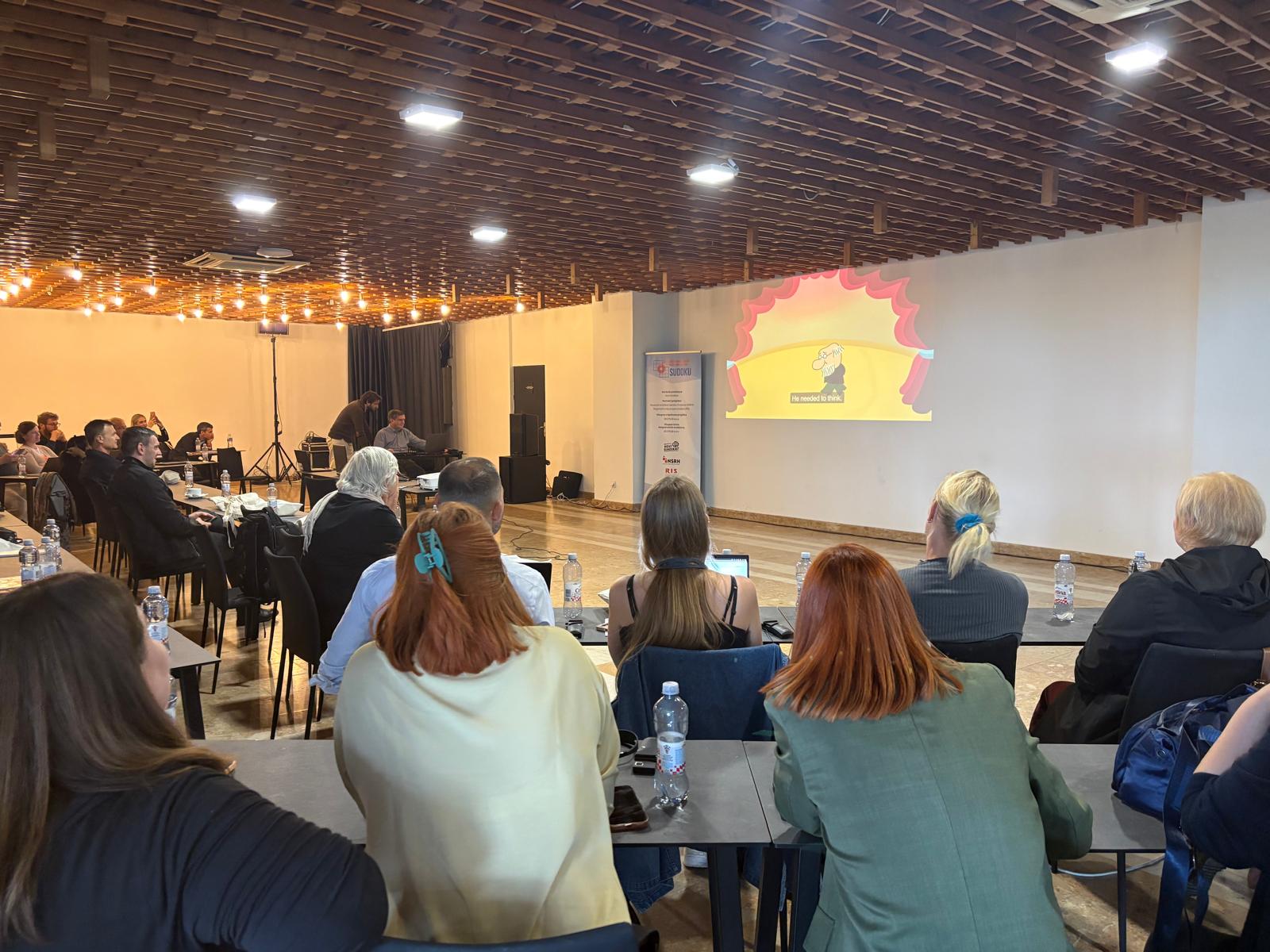
The plenary program continued with a trade union adaptation of the famous Croatian animated series Professor Balthazar. In this version, Balthazar comes to the aid of female knitwear workers facing excessively high temperatures in their factory.
The animation was presented by Aleksandar Gavrilović, producer at the Gamechuck studio, who announced that this was the first of several planned animated works. The project is ultimately expected to result in the development of a video game.
Professor Balthazar served as an introduction to a session dedicated to the European Living Wage, at which the methodology used to calculate it and the results of the latest research were presented.
As part of the research, a monthly meal plan was developed based on a daily intake of 2,950 calories. The food products required to meet this nutritional standard were then identified, forming a healthy food basket. Researchers collected prices for these products in around a dozen large and small shops, at local markets and directly from small agricultural producers.
The final calculation of the European Living Wage will be available once the same research has been conducted in several additional European countries and the remaining calculations have been completed.
Preliminary results for Croatia indicate that a person needs approximately €373 per month for a healthy diet, while the estimated living wage based on total living costs exceeds €3,000.
How can the right to a living wage become a reality?
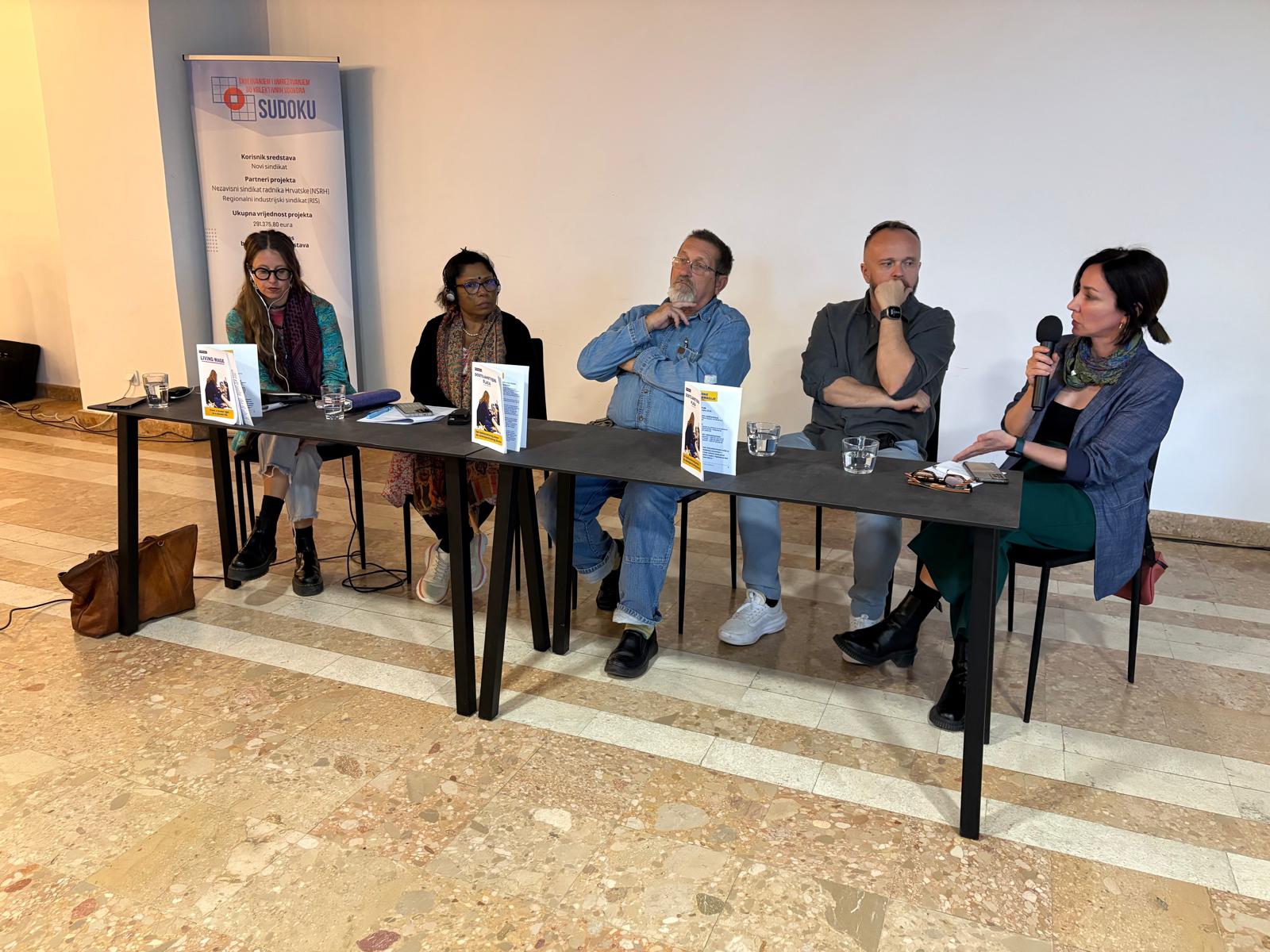
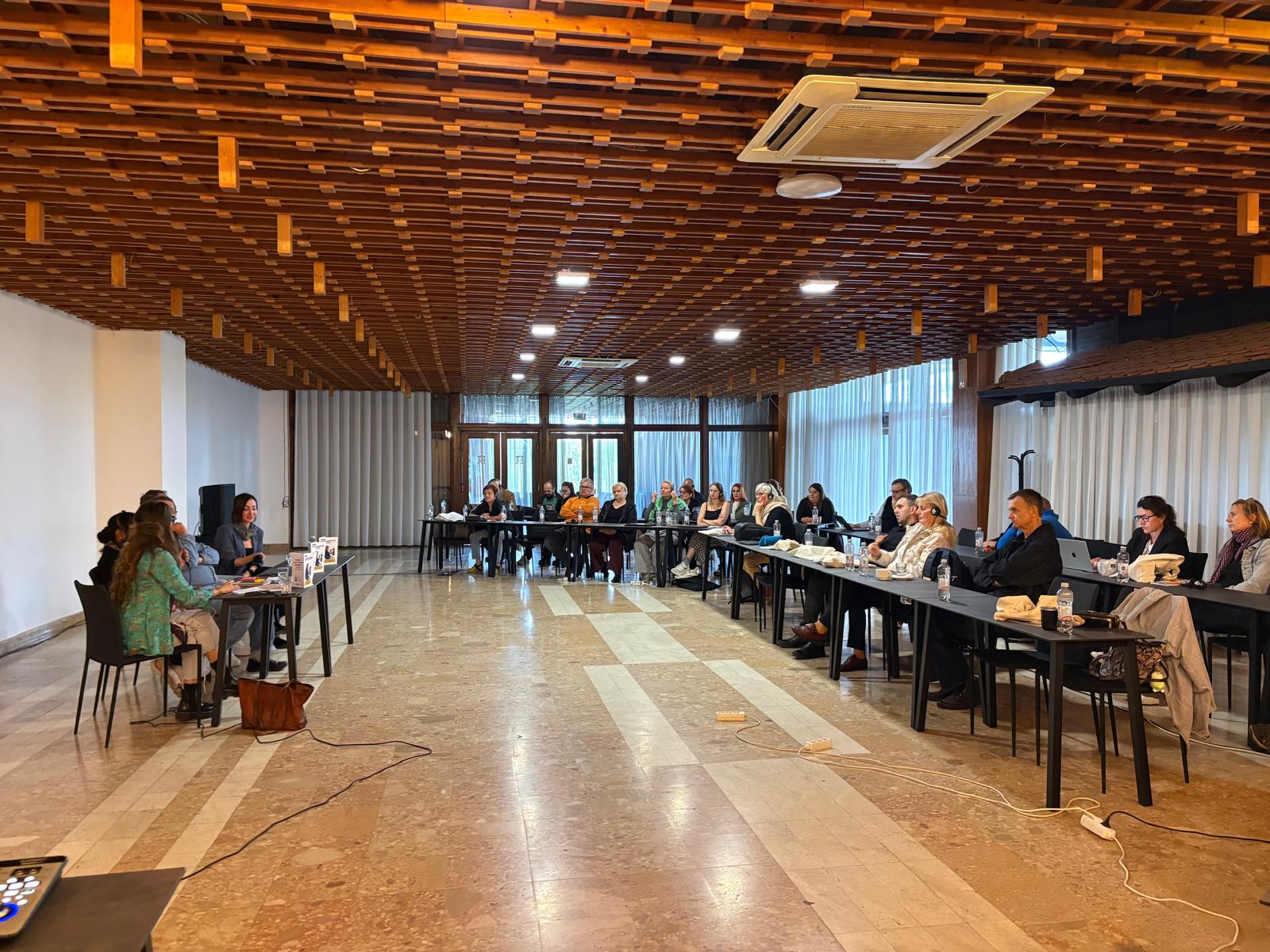
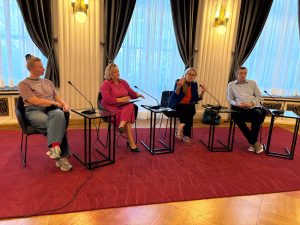
The central panel discussion, “From a Declarative Right to Reality – How Can the Right to a Living Wage Be Achieved?”, brought together speakers from Croatia, the region and around the world.
The panel featured Kalpona Akter, a Bangladeshi trade union activist and former child labourer; Bojana Tamindžija, coordinator of the labour rights programme at the Centre for the Politics of Emancipation in Serbia; Armin Šestić, an advocate for social justice, workers’ rights and cultural freedoms from the Zora Association in Zenica; and Tomislav Kiš, member of the Executive Board of Novi sindikat and its former Secretary General.
The discussion was moderated by Tibbe Smith Larsen, a labour rights activist from Denmark.
Bojana Tamindžija emphasized the need for cross-border campaigns and for demands to be directed towards the places where decisions are actually made. She also highlighted the importance of political representation of workers’ interests and warned against widespread resignation and the belief that a better social system is impossible. She argued that this myth must be challenged and that space must once again be created for demands for systemic change.
Kalpona Akter spoke about the experience of Bangladesh and the global textile and garment industry, stressing that international companies locate production there primarily because of cheap labour and lower production costs. She identified European legislation establishing corporate responsibility for conditions throughout companies’ supply chains as one possible instrument for change, alongside internationally binding agreements on factory safety such as the Bangladesh Accord. She stressed that employers organize and cooperate globally, and that workers must do the same.
Armin Šestić pointed out that workers face similar problems regardless of the country in which they live. This is why solidarity and cooperation at every level are essential – among trade unions and civil society organizations, locally, nationally and internationally.
According to Šestić, two processes must take place simultaneously: workers must be made aware that a living wage is their right and must be educated and encouraged to fight for that right collectively and in an organized manner, while advocacy for the recognition and implementation of this right must continue at the local, national, European and global levels.
Tomislav Kiš emphasized the importance of strong and organized trade union activity, solidarity among workers, and the creation of a broad platform capable of bringing together trade unions and other social actors in the struggle for dignified working and living conditions.
In line with all of the above, the key message of the conference was clear: a living wage is not an abstract ideal or a privilege, but a right without which there can be no dignified life.
Recognizing this right in constitutions, conventions and other documents is not enough. It must become a reality in the workplace.